Marcelo Mena |
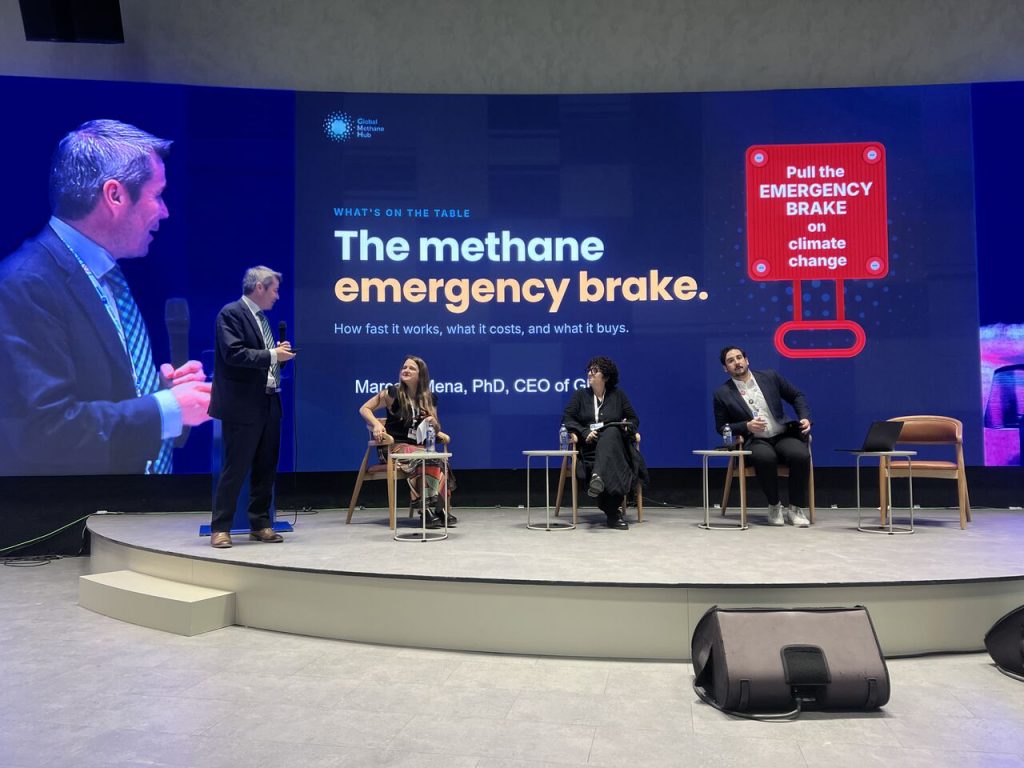
In the shadow of the disappointment we all feel that COP31 did not end in a formal agreement that includes phasing out fossil fuels, the two weeks was not a complete loss for all who attended. COP has grown over the years from a convening with hundreds of participants, to one with thousands, including many from underrepresented communities on the frontlines of the worst impacts of climate change. COP gives people from around the world a chance to share knowledge, build relationships and make plans to work together. Our team at the Global Methane Hub joined those conversations in Antalya with a practical question: How can we help more communities, governments and businesses put proven methane solutions to work?
Across conversations on waste, agriculture, energy, finance, methane monitoring, and data transparency at COP31 over the past two weeks, it’s clear that we’re not starting from scratch. We know where many of the biggest sources of methane are and we have proven approaches that can reduce emissions – from satellite monitoring to strategies to reduce oil and gas flaring. The challenge now is getting those solutions beyond commitments and individual projects and reaching the scale we need.
There is no time to lose. Methane is more than 80 times as powerful as carbon dioxide over a 20-year period, and reducing it is one of the fastest ways we can slow warming in the near term to avoid the most devastating impacts of climate change.
Agriculture, oil and gas, and organic waste account for most human-caused methane emissions, which means we also have a good understanding of where action needs to happen. And people want action.
We see that very clearly in our new international survey that we released with the Yale Program on Climate Change Communications. We surveyed adults across 18 countries in four continents to measure public awareness of climate change and methane, and examine attitudes toward methane reduction solutions around the world.
 Across those countries, 85% of respondents surveyed supported action to reduce methane emissions. We also found for the third consecutive year that people who report experiencing the impacts of climate change the most — including extreme heat, wildfires, flooding, drought, and poor water quality — are more likely to support actions to address climate change.
The majority of adults who responded to the survey said they would view policymakers more favorably if they took steps to reduce methane emissions. So there is a real mandate for action. These findings give me hope. People want cleaner air, healthier communities, stronger food systems, and more resilient economies – and they’re increasingly understanding that reducing methane pollution can help get us there. Our job is to work together to turn that support into progress.
Reducing Methane Pollution from Organic Waste
 Over the past few years, the Global Methane Hub (GMH) has worked alongside partners, experts, climate leaders, and governments to reduce methane pollution from organic waste. Together, we have moved waste from a footnote to a growing climate priority. The COP31 Presidency built on that progress by making zero waste a key part of its agenda.
Organic waste accounts for roughly 20% of human-caused methane emissions. Landfills and dumpsites are a significant source of these methane emissions, particularly when food and other organic materials are buried and decompose without oxygen. We already know many of the solutions – preventing food waste, separating organic materials, composting, and better landfill management. Eighty percent of the solutions are low cost. The challenge is building the infrastructure, policies, and financing that allow those solutions to work together.
The Zero Waste Districts Initiative, which launched in September, takes that integrated approach to reducing methane pollution from organic waste. It brings waste streams, infrastructure, local governance, and investment together rather than treating each facility or waste source separately. Partners are developing pilot districts in Malaysia, Chile, Brazil, and Kenya, with plans to expand the model across the world.
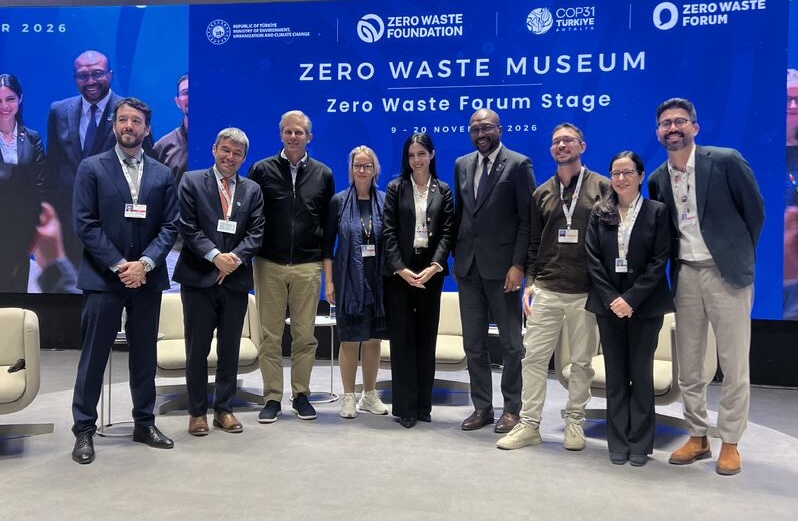
We built on this progress at COP31 by bringing leaders together. Vidvatta Sharma, our Senior Regional Associate for Asia, joined a conversation focused on how better waste management supports health; our Latin America Regional Lead, Henrique Bezerra joined a panel where he discussed how governments can use emissions data to target action; I joined conversations on how philanthropy can support early-stage waste solutions and help unlock larger pools of public and private capital; and how making organic waste projects bankable and scalable, the latter moderated by Henrique. These dialogues gave us a lot of great ideas for future collaborations to accelerate organic waste reduction.
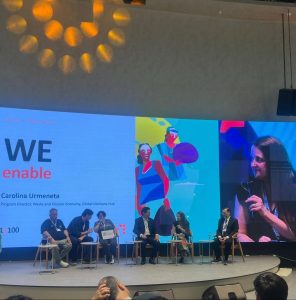 Program Director for Waste and Circular Economy, Carolina Urmeneta also joined the launch of 1×100: Making Numbers Count, an initiative from the International Alliance of Waste Pickers and FairTon that aims to have 100,000 waste pickers recover one million tonnes of recyclable materials over 400 days. Better waste systems must include the workers and communities who already make them function.
Reducing Methane Pollution from Agriculture
We joined partners from around the world to explore a range of opportunities to reduce agricultural methane emissions. Manjyot Kaur Ahluwalia, our Regional Lead for Asia, joined Danone for a conversation focused on how data, technology, and partnerships can help dairy farmers strengthen resilience while reducing methane emissions, while Henrique joined Imaflora for a discussion on how Brazil’s livestock sector can reduce methane emissions while maintaining productivity. I also joined Danone at the France Pavilion to discuss what it will take to move proven methane solutions beyond pilots and reach more farmers.
Throughout these conversations, we heard that for farmers, solutions need to make practical and economic sense to protect productivity and livelihoods. GMH is committed to helping partners scale effective solutions. For example, our Rice Methane Innovation Accelerator will advance research into agricultural practices, soil amendments, plant genetics, methane-reducing agents, and measurement tools to reduce methane emissions in rice production. This kind of R&D is critical to protect our environment and farmers’ livelihoods alike, ensuring smart strategies to reduce emissions can also increase crop yields.
Strengthening Energy Security by Reducing Methane Leaks
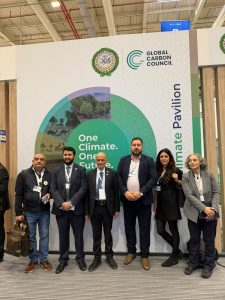 At COP31, GMH joined partners to explore how stronger monitoring, policies, and implementation can accelerate methane reductions in China’s energy sector. For example, China’s implementation of its Methane Emissions Control Action Plan has strengthened methane monitoring and reporting, expanded efforts to detect and repair oil and gas leaks, and increased the capture and use of coal mine methane.
Energy Senior Program Manager Olivia Azadegan also joined partners in the Arab Climate Pavilion to discuss cutting methane emissions from the oil and gas sector in the Middle East. Our Global Engagement Director, Mohamed Sultan, joined a conversation to discuss how reducing methane leaks can support Nigeria’s broader efforts to move beyond oil and gas and diversify its energy sector.
These conversations reinforced that many of the tools and technologies to identify and repair oil and gas methane leaks already exist. The opportunity now is to make sure companies use them and help countries implement strong policies and reporting systems.
From Data to Action
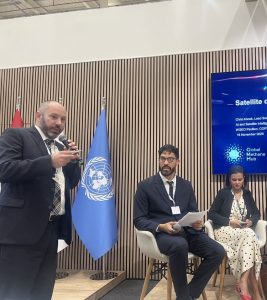
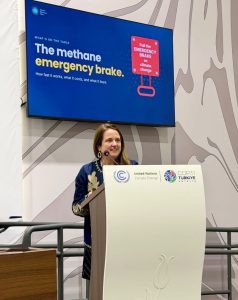 This year’s conference showed how quickly methane monitoring is improving. At the International Methane Emissions Observatory Ministerial at COP31, I joined government, industry, and civil society leaders to discuss how stronger emissions data – like satellite observations and the Methane Alert and Response System – now give governments, companies, and researchers clearer information about where major emissions occur and guide mitigation.
Here are a few examples from COP31 that show how our partners are translating data into action:
A Win-Win for Communities
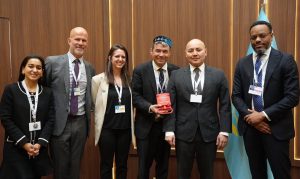
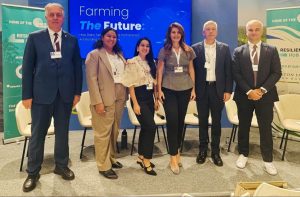
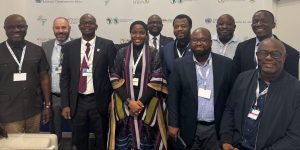
Throughout COP31, our team joined partners to highlight how cutting methane emissions can deliver benefits beyond the climate — from cleaner air and healthier communities to stronger food systems and economic opportunity. Conversations focused on how better waste management can improve public health, how climate and clean air investments can deliver economic benefits, and how policymakers can help communities put those solutions into practice.
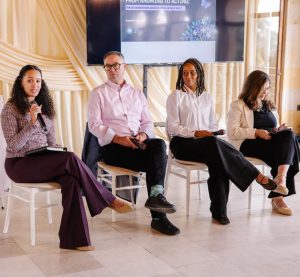
Our Communications Lead, D’Seanté Parks convened journalists, advocates, strategists, and policymakers at TED Countdown House to discuss how to connect with people, increase public information, and inspire action. Strategic communications is a critical part of connecting methane reduction to the way people actually experience its impacts, including public health, food security, economic advancement, and air quality. The event was a partnership with Uma Gota no Oceano, a Brazil-based strategic communications organization that works to bring socio-environmental issues into the public conversation.
Our Africa Regional Lead, Habiba Daggash and Chris Konek also met with partners from across Africa to discuss opportunities to advance methane action on the continent.
Momentum Is Growing
 At the Leaders’ Level Methane and Other Non-CO₂ Greenhouse Gases Summit, philanthropic funders announced more than $480 million to help scale practical solutions across energy, agriculture and waste to reduce methane emissions, alongside efforts to reduce other super pollutants. The investment will help close a key implementation gap by catalyzing action and helping mobilize the additional public and private investment needed to bring proven solutions to scale.
At the Canada Pavilion’s Methane Reception, Canadian Environment Minister Julie Dabrusin also announced Canada’s plans for additional industry engagement and the country’s commitment to chair the Global Methane Initiative, an international partnership that brings governments and private sector partners together to advance methane reductions.
Looking Ahead
COP will not solve the climate crisis in two weeks. But these events create a rare space for governments, researchers, companies, philanthropy, civil society, and communities to share what they are learning and find opportunities to work together to build healthier communities.
COP31 reinforced that the gap between commitments and implementation has not disappeared. But we know much more about how to close it.
What happens after Antalya will determine COP31’s impact: whether projects secure financing, governments put policies into practice, companies, and regulators respond to major emissions, agricultural solutions reach farmers, and cities build better organic waste systems.
Ultimately, we need methane emissions to fall. At GMH, our role is to connect the people, knowledge and resources needed to make that happen. We understand the challenge better. We have more tools to address it. Now we have to turn that progress into results.
Sincerely,
Marcelo Mena
CEO, the Global Methane Hub