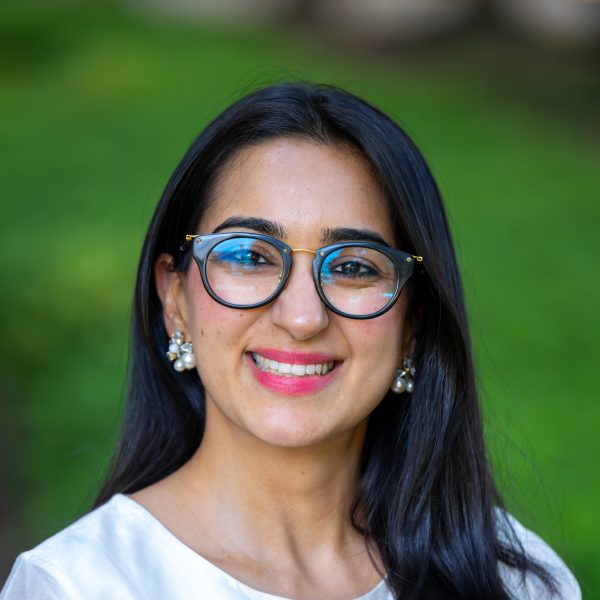
Manjyot is a climate policy professional specializing in international diplomacy, multi-stakeholder engagement, and private sector action. Growing up in Bhopal, India, the City of Lakes that endured a gas tragedy in the 80’s, Manjyot was drawn to solving the environmental and climate crises with a deep recognition of the impacts to vulnerable communities and fragile ecosystems.
At the Global Methane Hub (GMH), she serves as the regional lead for Asia. Manjyot manages a cross-functional strategy to scale the Hub’s three sectoral programs – energy, waste and circular economy, and agriculture – across India, East and Southeast Asia, and Central Asia. She engages with key policymakers, international organizations, and civil society organizations on global diplomacy and multilateral cooperation to integrate methane mitigation in national and global climate priorities. She enjoys convening partners, building the infrastructure and capacity of grassroots organizations, and fostering platforms for South-South collaboration.
Previously, Manjyot held pivotal roles at World Wildlife Fund-US (WWF), the United Nations Environment Programme, and the Center for Climate and Energy Solutions (C2ES). At the WWF, she spearheaded the launch of the Alliances for Climate Action, a coalition of over 6,000 subnational, private sector, academic and civil society organizations dedicated to the 1.5°C Paris Agreement targets, inspired by the “We are Still In” movement in the United States. Her seminal C2ES report on corporate carbon pricing remains a blueprint for companies navigating regulatory and physical climate risks.
Manjyot holds a Ph.D. in Public Policy and Administration from American University in Washington, D.C., and a master’s in sustainability from the School of Sustainability at Arizona State University.
Manjyot resides in India and finds balance through art, yoga, and birding.