The collaboration demonstrates the value of satellite monitoring and sustainable waste management practices for methane mitigation
FOR IMMEDIATE RELEASE: September 18, 2026
SERODIPICA, BRAZIL — Multiple years of collaboration on methane monitoring and mitigation from the Global Methane Hub (GMH) and its partners, SRON (Space Research Organization Netherlands), Carbon Mapper, RMI, Clean Air Task Force, and Rio de Janeiro’s municipal waste authority COMLURB, have yielded significant improvements to methane emissions at COMLURB’s Center for Treatment of Residues in Seropédica (CTR-Rio), one of the largest sanitary landfills in Latin America. As part of this collaboration, which includes the TWOS (Targeting Waste emissions Observed from Space) Project, the organizations used satellite technology to target methane emissions at CTR-Rio and added new biogas wells. The new wells captured an average of 8.24 tCH₄ per hour, worth $3,600 per hour for operators, significantly reducing methane emissions in the area, cutting costs, and improving energy use.
Methane from landfills is one of the largest and most controllable sources of greenhouse gas emissions in cities throughout the Global South. Serving a metropolitan population of millions, CTR-Rio receives about 295,000 tonnes of municipal solid waste each month. While CTR-Rio has been designed to integrate the latest innovations for energy recovery and biogas capture since its 2012 founding, putting it on the cutting edge of sustainable waste management, it has historically been challenging to measure methane escaping into the atmosphere independently and at scale. The TWOS Project was created to fill this gap, combining satellite remote sensing, scientific analysis, and local operational expertise.
Through TWOS, SRON has conducted monthly high-resolution GHGSat satellite observations of CTR-Rio since 2023 to identify, measure, and pinpoint methane plumes at the landfill. The GHGSat and Carbon Mapper satellite methane data for global landfills and dumpsites are hosted and publicly available through WasteMAP’s platform (a joint project of GMH, Google.org, RMI, and CATF). GMH has collaborated closely with COMLURB’s operational teams to put that data into practice by linking satellite observations to tangible on-the-ground modifications. In 2025 alone, CTR-Rio added almost 500 new biogas wells to the methane capture network based on the satellite images, increasing capture flow by 7.35% compared to 2024. The average monthly biogas capture was close to 14.8 million Nm³, and the captured methane was supplied to third-party operator Gás Verde S.A. for electricity generation and biomethane purification, showcasing economic benefits for operators that pursue methane mitigation.
“This partnership demonstrates the power of collaboration on monitoring, accountability, and mitigation to reduce harmful methane emissions. These findings offer the kind of transparent, independent proof that governments, civil society, and philanthropy need to take action,” said GMH Latin America Regional Director Henrique Bezerra. “CTR-Rio is just one example of a strategy that can be reproduced in landfills around the world and provide healthier, more sustainable communities.”
“The strategic partnership between COMLURB, GMH, and SRON was instrumental in advancing sustainable waste management in the municipality. The studies conducted enabled a better understanding of the landfill and the definition of best operational practices for mitigating greenhouse gas emissions,” said Bernardo Ornelas, landfill coordinator, COMLURB. “By linking climate action with efficient energy recovery from biogas, COMLURB drives down methane emissions while maximizing the financial return from biogas valorization into biomethane and electricity.”
This announcement comes shortly after a report from the Brazilian System for Greenhouse Gas Emissions and Removals Estimates (SEEG), part of the Climate Observatory, found that Rio has some of the highest methane emissions in the country, driven mainly by the city’s waste sector. If landfills don’t address methane emissions, surrounding communities are exposed to the risk of landfill fires, seen clearly by Delhi’s Ghazipur landfill, one of the largest in India, which experienced a devastating fire in 2024. Landfill fires release toxic fumes and thick smoke, threatening air quality in cities already dealing with pollution.
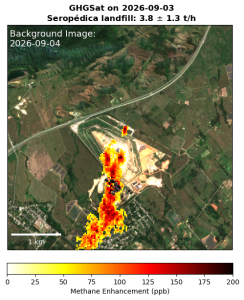
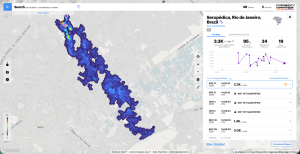
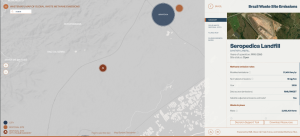
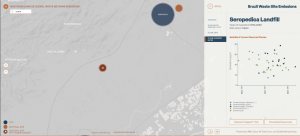
For more information on the TWOS Project, please visit here. For more information on The Global Methane Hub and its global efforts to reduce methane emissions, please visit here. For more information on the WasteMAP platform, please visit here.
###
About the Global Methane Hub
The Global Methane Hub organizes and unites governments, industry leaders, scientists, and nonprofit organizations across the globe to minimize methane pollution through technology and common-sense public policies and regulations. We have raised over $500 million in pooled funds from more than 20 of the largest climate philanthropies to accelerate methane mitigation worldwide.