
Up to 70% of global agricultural methane emissions stem from livestock digestion. With smart investments into research and development (R&D) farmers can cut emissions, increase productivity and feed a growing population.
The Global Methane Hub’s Enteric Fermentation R&D Accelerator supports the development of a holistic and balanced portfolio of research and technologies that are accessible and viable for farmers around the world to adopt.
The Accelerator funds previously overlooked areas of research that could be transformative in delivering urgently needed methane mitigation.
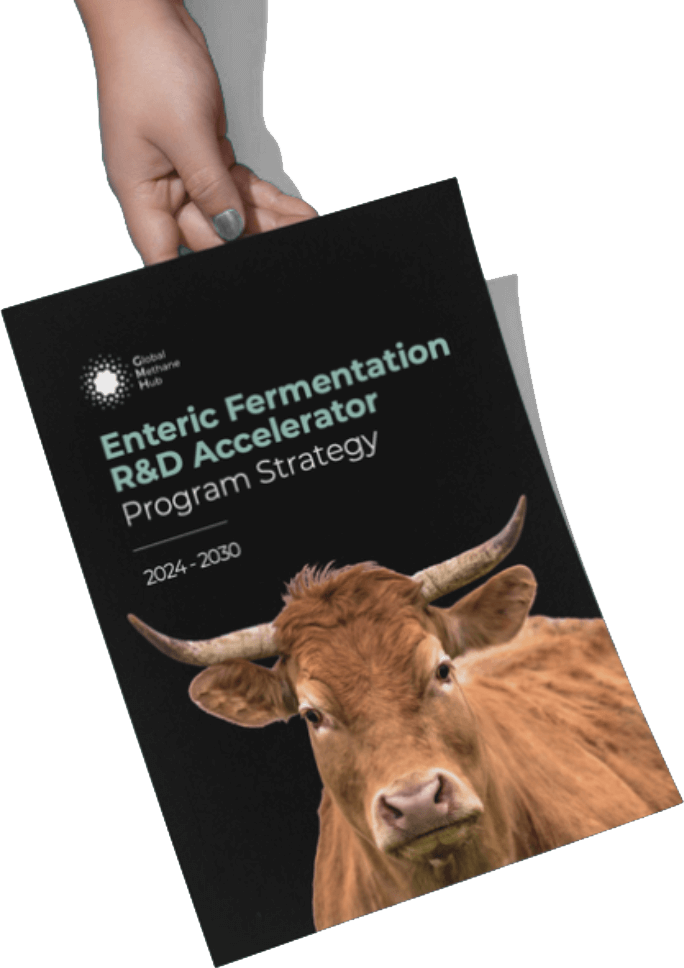
Launched at COP28 in partnership with the Bezos Earth Fund, Gerstner Philanthropies, High Tide Foundation, Gates Foundation, Danone and other partners, the Accelerator’s research strategy is guided by a Science Oversight Committee of leading experts.
The strategy sets clear research priorities to fast-track methane-reducing solutions across diverse livestock systems worldwide.
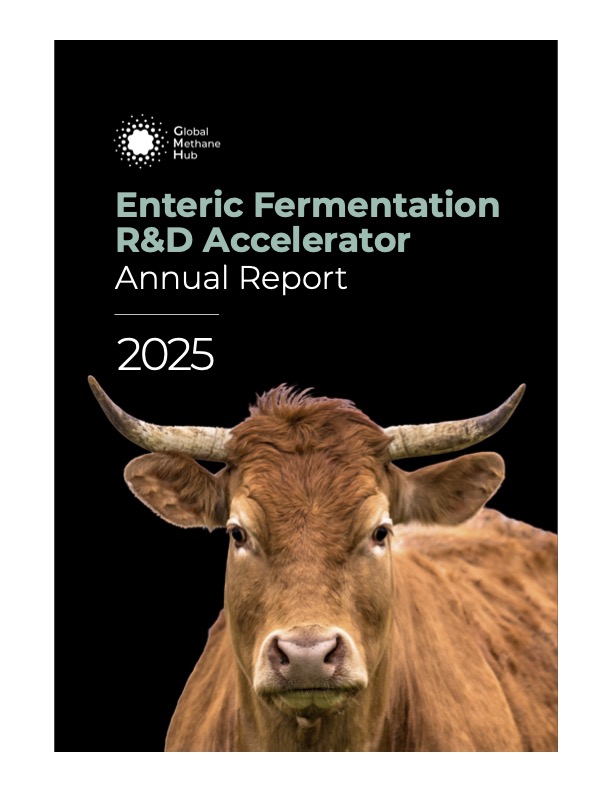
The Enteric Fermentation Accelerator has come a long way since its launch, with a growing portfolio of research across genetics, inhibitors, vaccines, and more. This has also been accompanied by increasing ambition from the private sector to tackle enteric methane. New research frontiers are opening up, and the global community of scientists, grantees, and partners working on this challenge is stronger than ever. Our latest report shares what we’ve achieved, where the science is heading, and how the enteric fermentation research ecosystem is becoming more connected and impactful than ever.
The Science Oversight Committee (SOC), a team of independent experts, guides the Global Methane Hub’s Enteric Fermentation R&D Accelerator. They identified seven priority research areas with the greatest potential to deliver innovative methane mitigation technologies. The Accelerator is now focused on addressing these key questions to close critical knowledge gaps.
Are you a researcher involved in livestock enteric methane emissions? We invite you to tell us about your research interests and capabilities.