This year’s Climate Week NYC focused on the energy, impact, and action we drive together. As heatwaves, extreme weather events, and volatile energy prices reshape daily life worldwide, the business case for climate action at speed and scale has never been greater.
Members of the Global Methane Hub team were on the ground participating in events and conversations focused on methane reduction across systems, climate finance, and intergovernmental collaboration. They met with climate leaders to discuss integrating methane mitigation into state-level climate strategies and development planning.
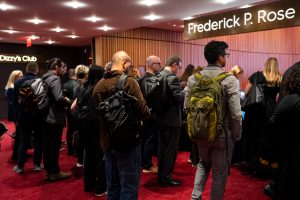
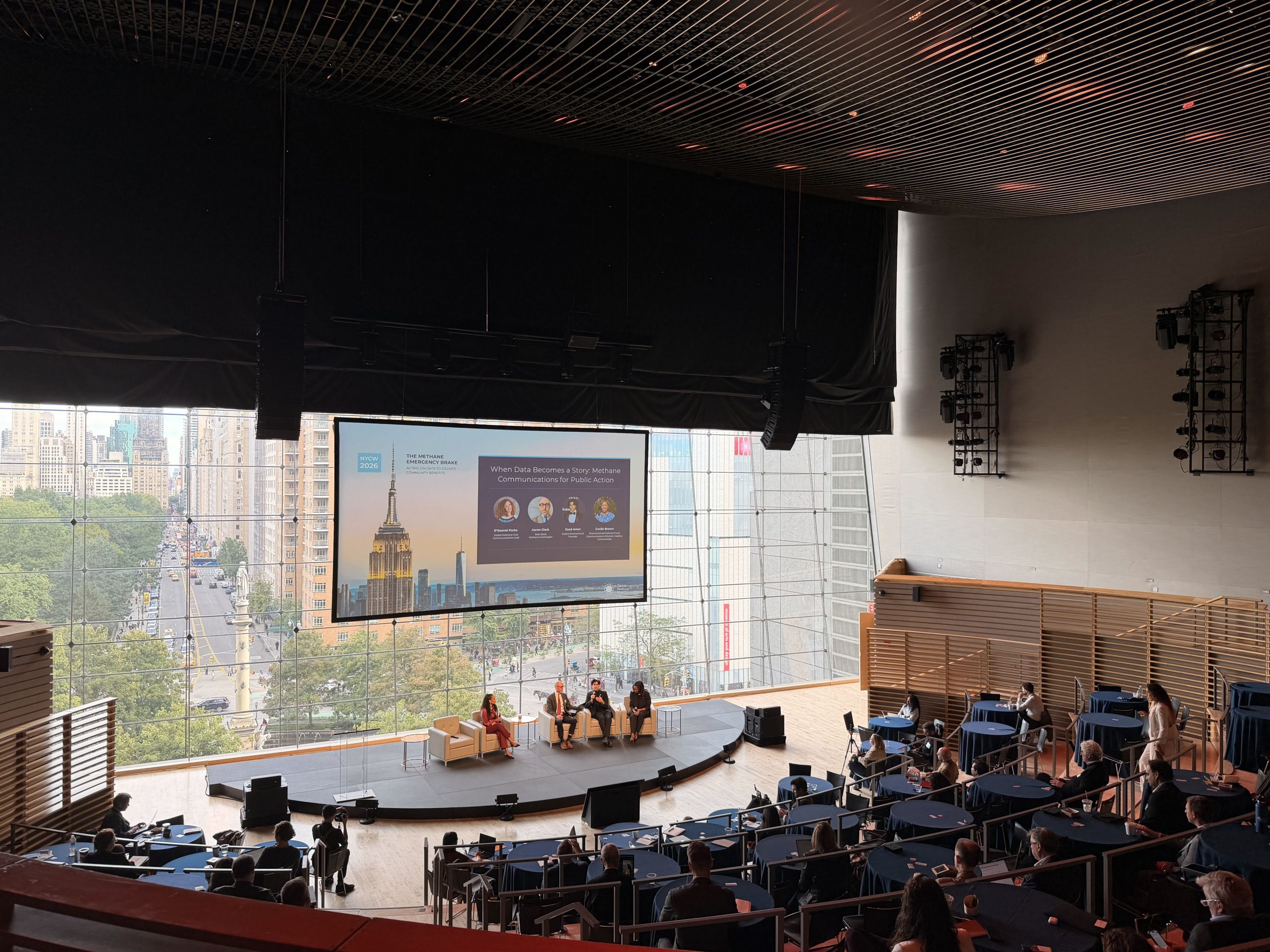
The GMH team culminated Climate Week NYC with “Methane Day” on Thursday, September 24, convening funders, grantees, and partners at Jazz at Lincoln Center for “The Methane Emergency Brake: Acting on Data to Deliver Community Benefits.” The program addressed the challenge that, while methane data is now more visible and precise, identifying emissions does not automatically lead to action.
During Thursday’s “Methane Day,” Neil Khor, Advisor to the Mayor of Kuala Lumpur, joined Adalberto Maluf, National Secretary of Urban Environment, Water Resources and Environmental Quality, Ministry of Environment and Climate Change, Brazil, and Andy McElroy from the Green Climate Fund to announce the soft launch of the Zero Waste Districts Initiative. Launched by the Zero Waste Foundation, the Green Climate Fund, and the Office of the COP31 Presidency, the initiative aims to reduce organic waste and methane by coordinating solutions across multiple facilities. This district approach enables shared systems for composting, digestion, reuse, washing, reverse logistics, and repair, while providing the necessary scale for effective governance, measurement, and finance.
Throughout the day, GMH experts led panel discussions on the increased visibility and precision of methane data, emphasizing that identifying emissions alone is not enough. Speakers shared evidence and lessons learned, showing how reliable data can drive stronger policy, regulation, corporate accountability, community advocacy, and verified emissions reductions.
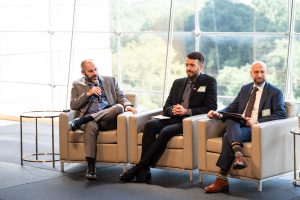
Chris Konek moderated a panel discussion on how methane data can drive a credible, scalable, and fundable mitigation pipeline. The session “Data to Action: Found, Fixed, Verified” brought together scientists, technology developers, regulators, UN institutions, and operators working to turn methane data into mitigation.
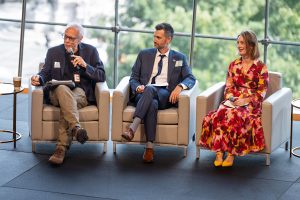
Energy Program Director Sarah Ann Smith moderated the session “What does it take when notifications aren’t enough?” The discussion highlighted individuals and organizations collaborating with communities to address this question. The session also featured a video from Gilda Hagan-Brown of Louisiana, who described the impact of landfill pollution on her community and how data supports their advocacy.
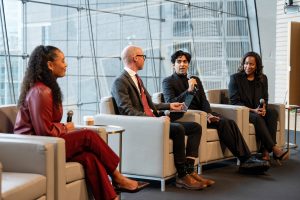
Communications Lead D’Seanté Parks led the panel “When Data Becomes a Story: Methane Communications for Public Action,” featuring a journalist, advocate and influencer, and communications strategist in a candid discussion about what communications tactics drive public engagement and policy change.
 The final session highlighted the hidden benefits of investing in methane and superpollutant reduction. Drew Shindel from Duke University presented key findings from UNEP’s analysis, “Hidden Assets: The economic and health case for climate and clean air action.” Marcelo then led a panel discussion on the investments needed through 2030 in people, institutions, and systems to turn data into action, emphasizing the economic, health, and development benefits of accelerated action and the costs of delay.
Methane Day concluded with a reception in the Ertegun Atrium at Jazz at Lincoln Center, where guests continued conversations, strengthened relationships, and explored opportunities for investment and collaboration.
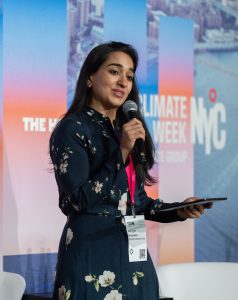 Before the main event, on Monday, September 21, Asia Regional Lead Manjyot Ahluwalia kicked off the week by participating in the Climate Group’s “The Super Pollutant Sprint: Local Action, Global Results” fireside chat. She joined leaders from government, philanthropy, and partner organizations to discuss effective strategies to reduce methane and other superpollutants, demonstrate results, and connect local action with global momentum. The session concluded with a call to action ahead of COP31—move from awareness to action.
On Tuesday, September 22, GMH Lead Scientist Chris Konek joined XPRIZE’s “One Climate Outcome, Multiple Methane Pathways” panel to discuss strategies for methane reduction and climate mitigation. He then helped announce Climate Curve’s inaugural Climate Curve Prize: Methane Award, the first global prize dedicated to advancing methane mitigation in food and waste systems. GMH is proud to be a funder of the prize. That evening, the communications team co-hosted a ‘Super Pollutants Communications Mixer’ with the Climate and Clean Air Coalition (CCAC) and the Rocky Mountain Institute (RMI). At the mixer, communications strategists, journalists, scientists, academics, and advocates met face-to-face to share tips, successes, and challenges—and spark ideas for engaging more people and developing new strategies for the superpollutant conversation.
On Wednesday, September 23, Manjyot participated in the panel “Beyond Pledges: Methane as a Test Case for Two-Tier Multilateralism,” hosted by the Center for Climate and Energy Solutions (C2ES), examining whether current methane governance delivers emissions reductions at the necessary scale and speed. Later, she joined a fireside chat with Youth Ki Awaaz, Yale Program on Climate Change Communications, and Momentum Shifts to discuss making climate communications in India more relevant to people’s lived experiences, such as heat, flooding, health, livelihoods, food, and urban livability.
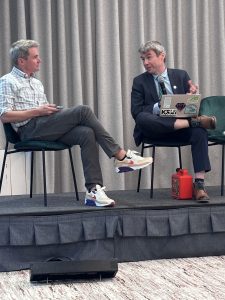 That same day, GMH CEO Marcelo Mena participated in the World Resources Institute’s roundtable, “Climate Diplomacy in a Messy World: Fresh Ideas for Cooperation in a Fractured Geopolitical Era,” to discuss revitalizing international climate cooperation. He also attended the Superpollutant Action Summit, hosted by Beyond Alliance, which convened 150 senior leaders from various sectors to accelerate superpollutant reduction.
Climate Week NYC demonstrated that uniting political will, focusing on solutions, and ensuring local and international accountability are essential to move from pledges to implementation. These gatherings show that collaboration across communities, governments, and industries can advance meaningful climate action.
As we approach COP31 in Antalya, we are grateful for the insights and lessons from Climate Week NYC and remain motivated to continue our work. As momentum builds, it is important to continue leveraging collective action on superpollutants.