
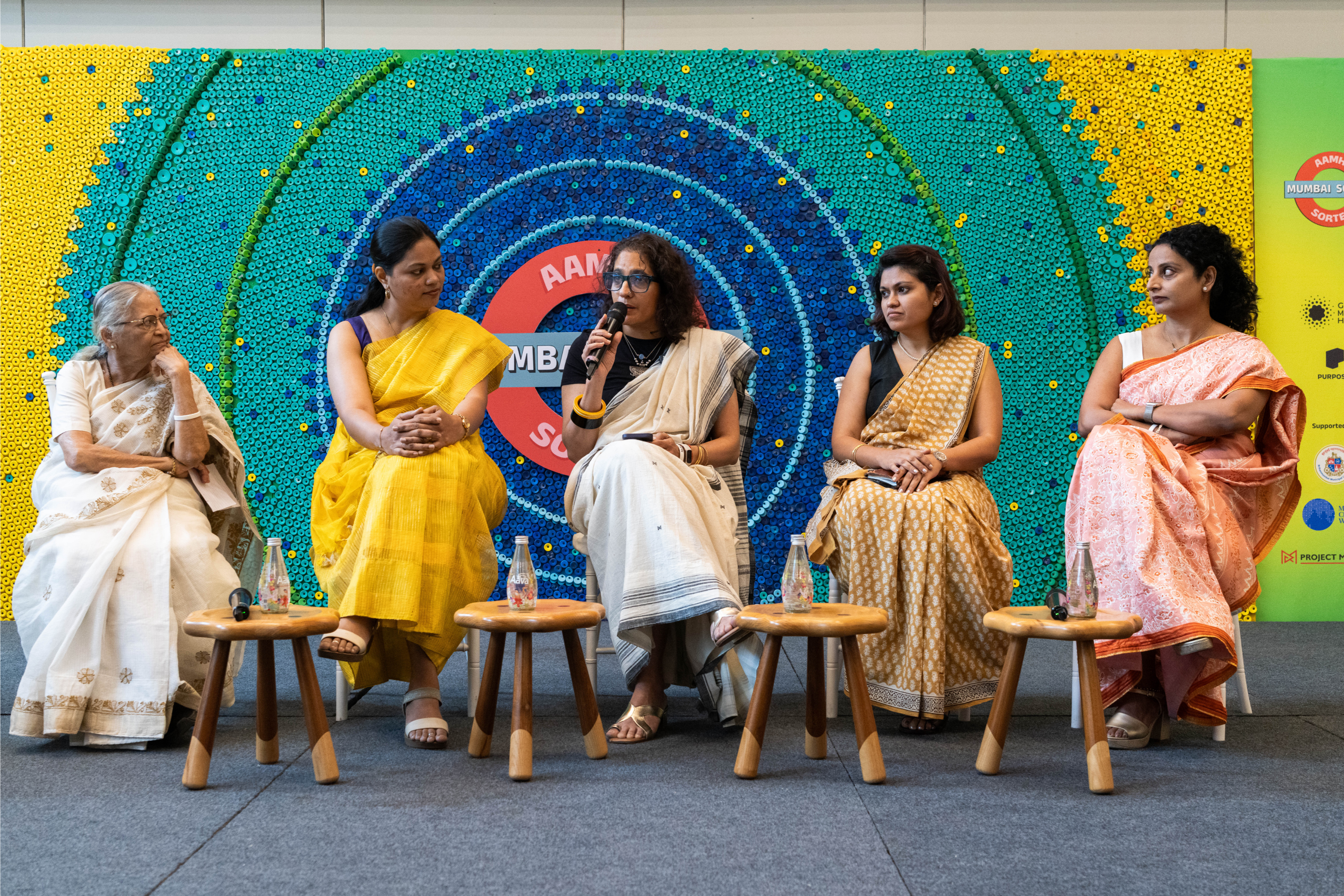
Mumbai Climate Week (MCW) marked a turning point for climate leadership in India. For the first time, climate action took center stage in Maharashtra as leaders across India and the Global South focused on accelerating citizen-led solutions to tackle the climate crisis. Complementing state and local climate action plans, the week signaled that Indian cities, states, climate experts, private sector, and civil society organizations are stepping forward to shape climate action in ways that reflect regional priorities, economic realities, and community needs.
In the days leading up to MCW, the Global Methane Hub (GMH) and WRI India convened Global South experts from Chile, Ghana, and India for the “Strengthening Urban Resilience: Addressing Landfill Fire Risks in the Global South” event – which examined landfill fires and associated methane emissions not as isolated municipal incidents, but as serious public health, air quality, and climate risks with a disproportionate toll on nearby communities and waste workers.
The discussion emphasized the need to shift from reactive responses to preventive risk governance, including methane mitigation, decentralized waste management and improved segregation to strengthen urban resilience and livelihoods. The speakers concluded with a call to co-create practical toolkits to help municipalities across the Global South integrate landfill fire risk prevention and account for methane emissions in city and national policy frameworks, including national and state clean air action plans.
The Global Methane Hub’s Regional Asia team – Manjyot Kaur Ahluwalia, Regional Lead for Asia and Vidvatta Sharma Regional Associate for Asia – were on the ground participating in events and conversations focused on food systems transformation, waste methane reduction, climate finance, and Global South collaboration. Throughout the week, they met with climate leaders to explore how methane mitigation can be better integrated into state-level climate strategies and development planning.
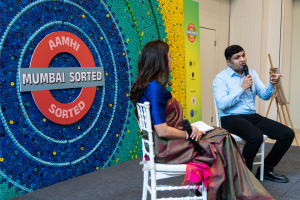
On February 14, in partnership with Purpose India, GMH brought together municipal officials from Brihanmumbai Municipal Corporation (BMC), including Mr. Kiran Dighavkar, Deputy Municipal Commissioner of Solid Waste Management, waste worker organizations, technical experts and civil society organizations for a half-day convening focused on scaling proven waste management solutions across Mumbai. The convening, featuring partners from C40 Cities, WRI India, and Stree Mukti Sanghatana, underscored the need for coordinated action between citizens, practitioners, and municipal systems to scale and strengthen Mumbai’s collection infrastructure to further enable effective waste segregation and help the city meet the new national Solid Waste Management rules requiring bulk waste generators to segregate at source.
As Mumbai Climate Week kicked off on February 17, GMH joined government leaders, scientists, industry innovators, funders, and climate champions committed to advancing bold climate action in India and beyond. The conversations highlighted the importance of catalytic climate finance to scale approaches, encourage private sector action, and advance public policies for the mitigation of methane and other greenhouse gas emissions, along with building resilience and enhancing productivity and farmer livelihoods.
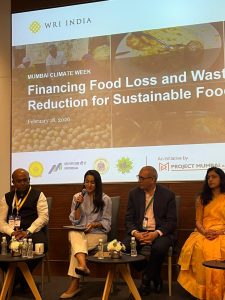 On February 18, Manjyot participated in a panel discussion during WRI India’s “Financing Food Loss and Waste Reduction for Sustainable Food Systems” event alongside Food Safety and Standards Authority of India, National Bank for Agriculture and Rural Development (NABARD), S4S Technologies, and Omnivore. The session examined how reducing food loss and waste can unlock climate, food security, and livelihood benefits, while identifying the financial levers needed to scale solutions from farm to plate.
In many ways, the inaugural Mumbai Climate Week captured a moment of transition. As the first convening of its kind in the city, it marked an important milestone for climate progress in India. With a host of climate convenings around the world, gatherings like Mumbai Climate Week are a reminder that local implementation and bold climate leadership from the Global South is the only way to meet global climate goals.